

Should I Detangle My Hair Wet or Dry?
Tes
Should I Detangle My Hair Wet or Dry?
· @Tess
Most straight and wavy hair can be detangled wet or damp, as long as we use a flexible, gentle brush and work from the ends up. Curly hair is best detangled wet and saturated with conditioner, while fine or fragile hair is happiest damp or dry. The real culprit behind breakage is rarely water alone — it is the wrong brush, used with too much force.
Should I detangle my hair wet or dry?
The short answer: it depends on our hair type, and on the brush in our hand. Straight and wavy hair can be detangled wet or damp without harm, provided the brush flexes rather than tugs.
Curly and coily hair usually detangles best wet, with plenty of conditioner for slip. Fine, fragile or chemically treated hair tends to fare better once it is damp or fully dry.
Here is the quick guide we use at home:
|
Hair type |
Best time to detangle |
Why |
|---|---|---|
|
Straight |
Wet, damp or dry |
Strands slide apart easily; a flexible brush does the rest |
|
Wavy |
Damp |
Water loosens knots without flattening the wave |
|
Curly |
Wet, with conditioner |
Brushing dry curls breaks the pattern and creates frizz |
|
Fine |
Damp to dry |
Wet fine hair stretches and snaps more easily |
|
Long |
Damp, in sections |
Length means more knots, so work from the ends up |
Whatever the hair type, the rules are the same: start at the ends, work upwards, and never force a knot.
Is it better to detangle wet or dry hair?
Water changes the way each strand behaves. It temporarily loosens the hydrogen bonds inside the hair's keratin, making the strand softer and far more elastic.
Dermatology research shows wet hair can stretch by around 30% of its original length without damage. Stretch it between 30% and 70% and the changes become irreversible; at 80%, the strand fractures. Dry hair, by comparison, stretches only about 20% before it starts to strain.
That elasticity is not the same as weakness, though. In one 2024 study of 25 samples per hair type, straight hair's peak strength dipped from 75.1 MPa dry to 70.6 MPa wet — a drop of roughly 6%. Curly hair barely changed at all (69.9 MPa dry, 71.8 MPa wet).
Combing trials tell a similar story. Wet combing actually causes fewer short, split-end style breaks than dry combing. The risk with wet hair is different: longer breaks higher up the strand, caused when a snag meets too much force.
Should you brush wet hair?
Yes — and we say that as parents who once believed the opposite. The idea that wet hair should never be brushed is one of hair care's most persistent myths.
The science above shows healthy wet hair has a generous safety margin before it is harmed. What pushes it past that margin is rarely the water. It is a rigid brush, a rushed stroke, or starting at the roots and dragging every knot down to the ends.
Another myth worth letting go of: the famous 100 strokes a day. The American Academy of Dermatology describes it as unnecessary, and one small study found hair loss fell when participants brushed less often over four weeks.
It also helps to know that shedding 50 to 100 strands a day is completely normal. Some hair in the brush after detangling is not, on its own, a sign of damage.
Why does brushing wet hair with the wrong brush cause breakage?
Most of us were never taught how to brush our hair. One professional hairstylist estimates as many as 95% of people do it incorrectly — usually by starting at the roots and pulling straight down.
A rigid brush makes that habit costly. Stiff prongs cannot bend around a knot, so the force travels into the strand itself. On wet hair, that is exactly how a strand gets stretched beyond its 30% comfort zone and snaps mid-length.
Slip matters just as much. In laboratory combing tests, a conditioning treatment cut wet combing force by around 65% compared with shampoo alone. Less drag means less stretch, and less stretch means fewer breaks.
Then there is the scalp. Hard prongs pressed onto a tender scalp hurt, and pain makes us rush. A rushed stroke is the one most likely to snap a strand or pull it from the root.
How did detangling our daughters' hair lead to the Curvy Detangler?
Our two daughters have always had very sensitive scalps. For years, detangling their hair was an epic task — there were tears, squealing and complete anarchy in our bathroom.
It reached the point where the girls would rather not detangle at all. We weathered repeated rounds of head lice, and more than one knot so matted it had to be cut out.
No wide-toothed comb could manage it. We tried all the popular plastic detangling brushes, but slick with conditioner and water, they slipped straight out of our hands — or hurt the girls.
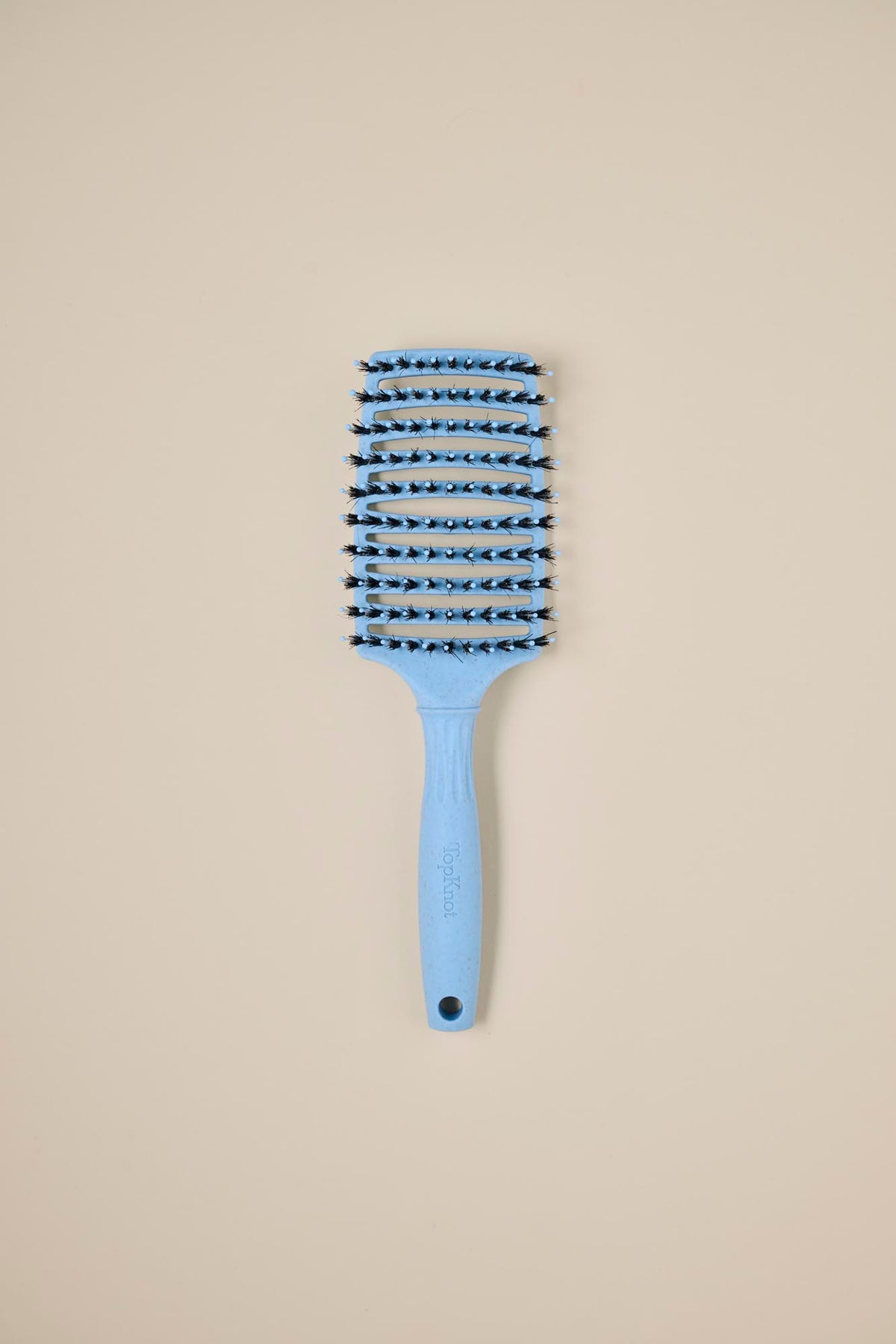
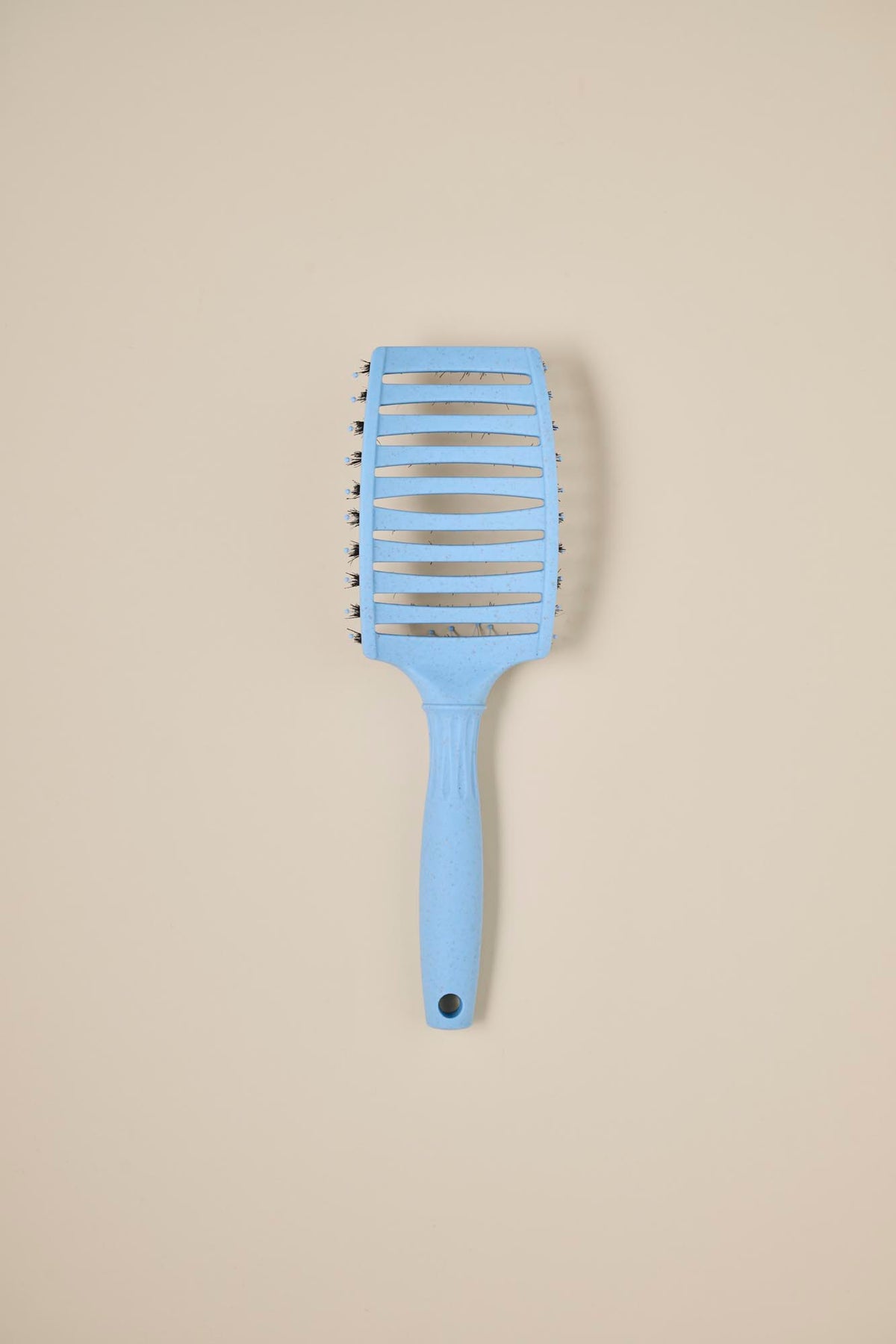
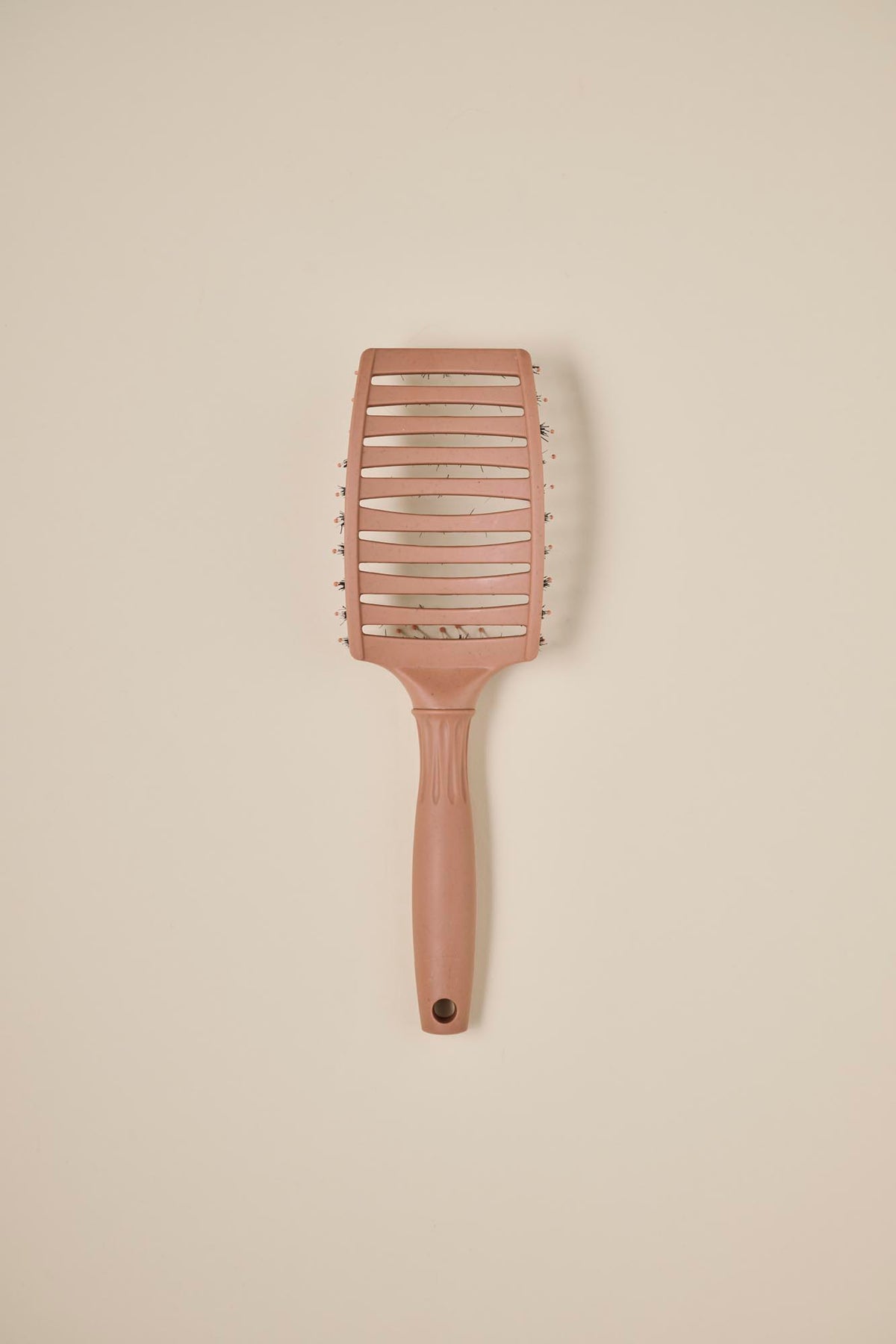
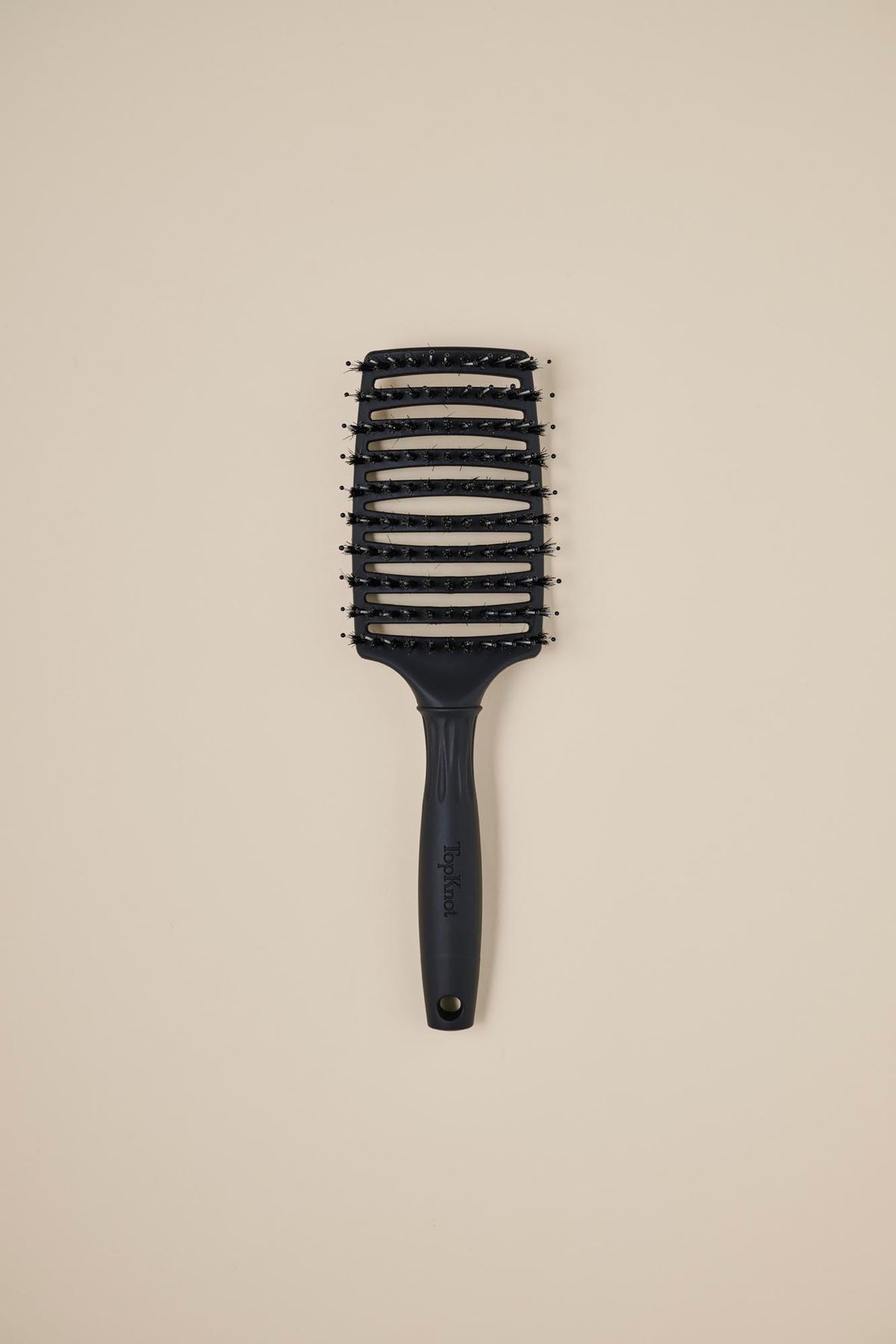
By the end, we had bought and thrown out five or six brushes and combs. So we decided to make our own: a detangler gentle enough for sensitive scalps, comfortable to hold when damp, and made with conscious materials. That brush became the Curvy Detangler.
What is the best way to detangle hair without breakage?
Those years of trial and error taught us that the brush matters more than the timing. These are the three things we now look for.
- Flexible nylon prongs. Prongs that bend around a knot, rather than pulling against it, keep strands well inside their natural stretch.
- A mix of prongs and boar bristles. The bristles soften each stroke on the scalp, so sensitive heads are not raked by bare pins.
- No air cushion. Cushioned pads can trap water inside the brush, which is unhygienic and shortens the brush's life.
A secure, comfortable grip matters too. A brush that slides around in a wet, conditioned hand invites rushed, uneven strokes.
The Curvy Detangler was designed around all four ideas — made to be used on damp or dry hair, and gentle enough for the most tender scalps in our house.
How do we detangle wet hair gently?
This is the ritual that finally brought calm to our bathroom.
- Condition first. Work conditioner through the lengths before any brush goes near them. Slip does most of the work.
- Blot, don't rub. Press out excess water with a soft towel. Hair that is damp rather than dripping has begun to regain its strength.
- Section. Divide the hair into two to four parts, depending on length and thickness.
- Start at the ends. Brush the bottom few centimetres first, then move up a hand-width at a time.
- Hold the root. For stubborn knots, hold the hair above the tangle so the scalp feels no pull.
- Never force it. If the brush catches, pause, add a little more conditioner and tease the knot apart with fingers.
Many stylists suggest waiting until fragile hair is 60–70% dry before brushing. For sturdier hair, damp is usually perfect.
How do we detangle dry hair without it hurting?
Dry detangling suits fine hair, freshly styled hair and those between-wash mornings. The method is the same, with a few small changes.
A light mist of water or leave-in conditioner adds just enough slip to protect the ends. Dry hair is more prone to static and end-wrapping, which is where short, split-end breaks tend to happen.
We keep strokes slow and short, always working from the ends upwards. For little ones with tender scalps, a hand resting at the root makes all the difference — it absorbs the tug before the scalp ever feels it.
Boar bristles earn their place here too. As the brush moves through dry lengths, they help carry the scalp's natural oils down the strand, leaving hair softer and glossier with every pass.
Should you detangle hair wet or dry for each hair type?
Should you detangle curly hair wet or dry?
Wet, almost always. Brushing dry curls separates the curl pattern and creates frizz. The bends in a curl are natural stress points, so generous conditioner and patient, sectioned strokes matter most here.
Should you detangle fine hair wet or dry?
Damp to dry. Fine strands have less mass to absorb force, so they are the most likely to overstretch when soaking wet. Let them air-dry partway first.
Should you detangle straight hair wet or dry?
Either. Straight hair tangles least and detangles easily wet, damp or dry, as long as the brush is flexible.
Should you detangle wavy hair wet or dry?
Damp is the sweet spot. It loosens knots without dragging out the natural wave.
Should you detangle long hair wet or dry?
Damp, and always in sections. More length means more knots gathering at the ends, so starting low and working up is essential.
When should you detangle your hair?
For most hair types, twice a day is plenty: once in the morning and once before bed. The evening brush matters more than we expect, because tangles left overnight tend to tighten into knots.
On wash days, the best moment is straight after conditioning, while the slip is still in the hair. Curly hair is often detangled in the shower itself.
For children, little and often works far better than a big weekly battle. In our house, a quick, gentle brush each evening ended the tears — and made it much easier to spot any unwelcome visitors early.
What happens to old hairbrushes?
This is the part of our story that stayed with us. Throwing out those five or six brushes broke our hearts, because we learned that hairbrushes almost never get recycled.
A typical brush combines a plastic handle, nylon pins, rubber cushioning and glue. Recycling facilities sort by single material, so mixed-material products like these go straight to landfill.
No one yet tracks how many hairbrushes are thrown away each year. Their close cousin, the toothbrush, offers a sobering guide: Australians discard an estimated 30 million to 111 million units annually. An estimated 99% end up in landfill or the environment, where they can take around 500 years to break down.
The wider picture is similar. Of the 9.1 billion tons of plastic produced globally, about 91% has never been recycled. Here in Australia, just 393,800 of the 3.5 million tonnes of plastic consumed in 2018–19 was collected for recycling — around 11%.
For us, the most conscious brush is the one we never need to replace. That is why the Curvy Detangler is made to last: longevity is our quiet act of sustainability.
Wrapping Up
In essence, whether you detangling your hair wet, dry or damp comes down to hair type, hair thickness, and hair condition. To work out the answers to these questions about your unique hair, try the TopKnot Hair Quiz. It will give you all of the answers you need to detangle your hair without causing any unecessary damage.
Sources
- Healthy Hair: What Is It? — Journal of Investigative Dermatology Symposium Proceedings (wet hair stretch thresholds)
- Weak Hydrogen Bonds in Temporary Shape Changes of Curly Human Hair Fibers — ScienceDirect (wet vs dry peak strength)
- Hair breakage during combing III — PubMed (wet vs dry combing breakage)
- Hair Elasticity — Cliphair (dry hair stretch)
- Wet hair styling and root vulnerability — Kibo Clinics (60–70% dry guidance)
- How to Brush Your Hair and Scalp — Laura K Collins (95% estimate)
- Brushing hair — Healthline (100-strokes myth, daily shedding, brushing frequency)
- Personal care compositions — US patent 10849839 (conditioner and wet combing force)
- Can You Recycle Hair Brushes? — Conserve Energy Future
- How Toothbrushes Affect the Environment — FOREO
- Environmental impact of plastic toothbrushes — Crescent Nest
- Millions of toothbrushes go into landfills — Fast Company (global plastic recycling)
- Plastics reprocessing rate continuing to rise — ALGA (Australian 2018–19 data)




Leave a comment
This site is protected by hCaptcha and the hCaptcha Privacy Policy and Terms of Service apply.