
How We Made A Consciously Crafted Hairbrush
How We Make a Consciously Crafted Hairbrush

Where it all started
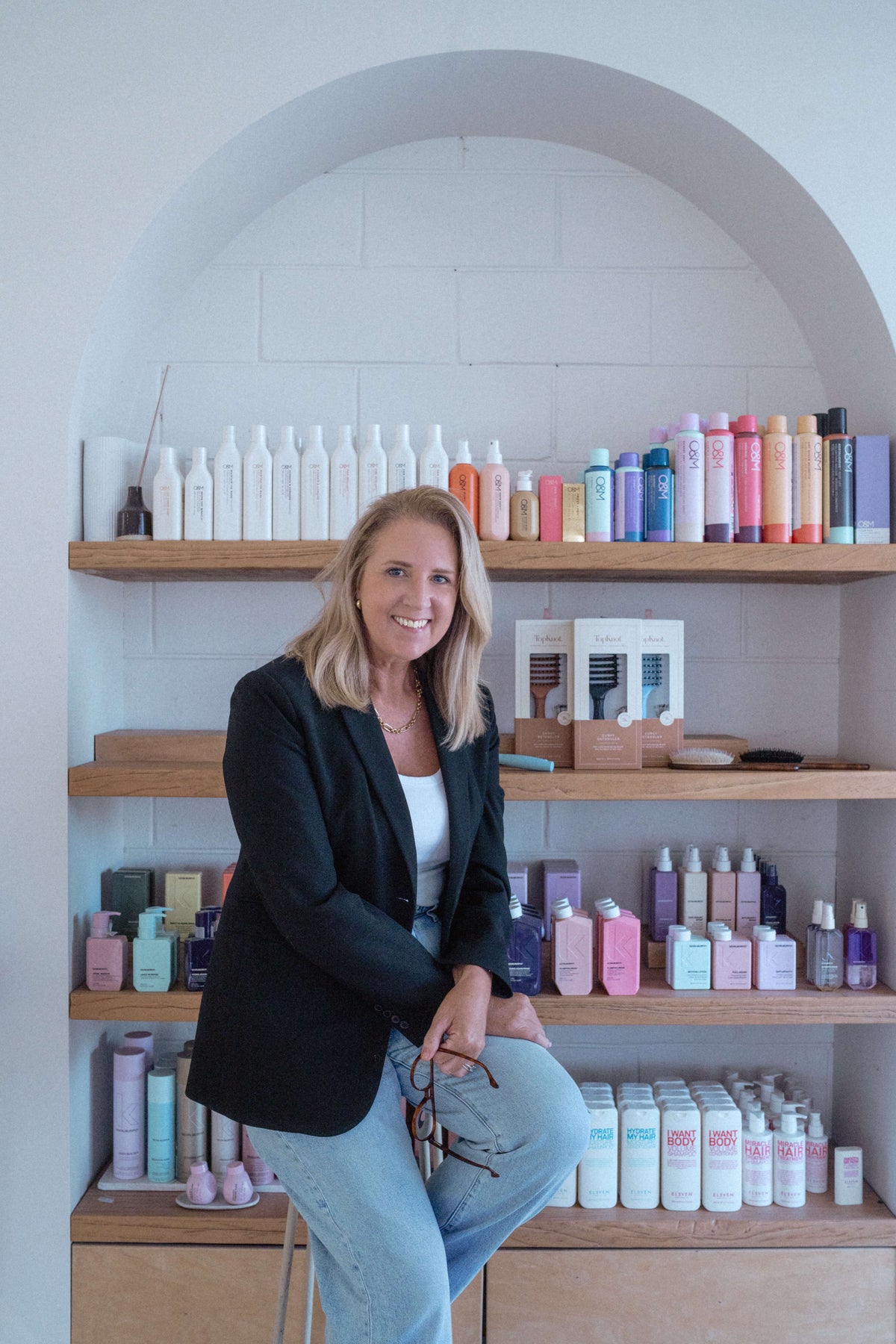
For 30 years, I worked as a brand strategist across advertising, product development, marketing and PR. Agencies, in-house teams, clients, consulting. I helped build other people's brands, and I loved it.
Then, in 2024, I was diagnosed with bowel cancer. Treatment ran through 2024 and 2025, and it changed the way I saw almost everything.
It took its toll on my hair. I didn't lose it all, but it thinned, and I found myself scrutinising every product and tool I used on my body, and everything I put into it. Nothing makes you more vigilant than an illness like that. I started asking harder questions about what I'd always accepted as normal, and whether there was a gentler, more considered way.
The experience also gave me clarity. About prioritising self-care. About finding my own voice. About enjoying the small, everyday moments that are so easy to rush past.
And it made me wonder whether I could make a bigger difference doing something of my own. TopKnot is the answer to that question.
Starting a brand from scratch is no walk in the park, even after decades of doing it for others. It has been especially challenging because we chose to put responsible materials, ethical production and honesty at the centre of it.
You can't just source a product off the shelf and slap a logo on it. It takes months, if not years, of tailoring, customising and engineering to get it right. Thankfully, it's a process I love.
We're all trying to make better choices
In the kitchen, our wardrobes, how we live.
But what about our beauty tools?
Most of us don't think twice about the plastic in the things we use every day: the hairbrush on the bathroom bench, the comb in the handbag, the clips by the bed. Yet a hairbrush is one of the most-used objects most of us own. It deserves the same thought we give to everything else.
A little reality check on plastic
Most beauty tools are made from petro-plastic, which is derived from fossil fuels. A few things are worth knowing.
- It lasts far longer than we need it to. Conventional plastic doesn't biodegrade, and estimates suggest it can sit in landfill for hundreds of years.
- Hairbrushes are hard to recycle. Most combine several materials, such as plastic handles, nylon bristles, rubber cushions and glue, which recycling systems struggle to separate. Most end up in landfill.
- Synthetic bristles can shed microplastics over time, which can find their way into waterways and the wider environment.
- Plastic still dominates the category. Brushes made from plastic and metal hold around 61% of the global hairbrush market, according to Grand View Research.
None of this is meant to make anyone feel guilty. It's simply the context we work within, and it's why the materials in a hairbrush matter more than most of us realise.
Brands have a choice. Here's ours.
Our mission is to reduce the petro-plastic in our products and packaging, step by step.
Wherever it doesn't compromise how a brush performs, we choose plant-based alternatives such as wheat straw, wood and bio-acetate. Where plastic is still needed, we look for ways to use less of it, or to use recycled plastic instead.
We're also honest that plastic still plays a role in making a hairbrush that truly works. Flexible nylon prongs, for example, are still the best way we've found to ease through knots without breakage. Removing plastic entirely means finding manufacturing partners willing to invest in new materials, at a price that stays fair for the people who use our brushes. That takes time, and we're committed to it.
The most important thing is that we keep trying to do better. Small, everyday choices add up, and the tools you use every day should care for more than just your hair.
The Curvy Detangler, honestly
Many hairbrushes, including some of the world's best-known names, have handles and bodies made entirely of petro-plastic, virgin or recycled. We wanted to start somewhere different.
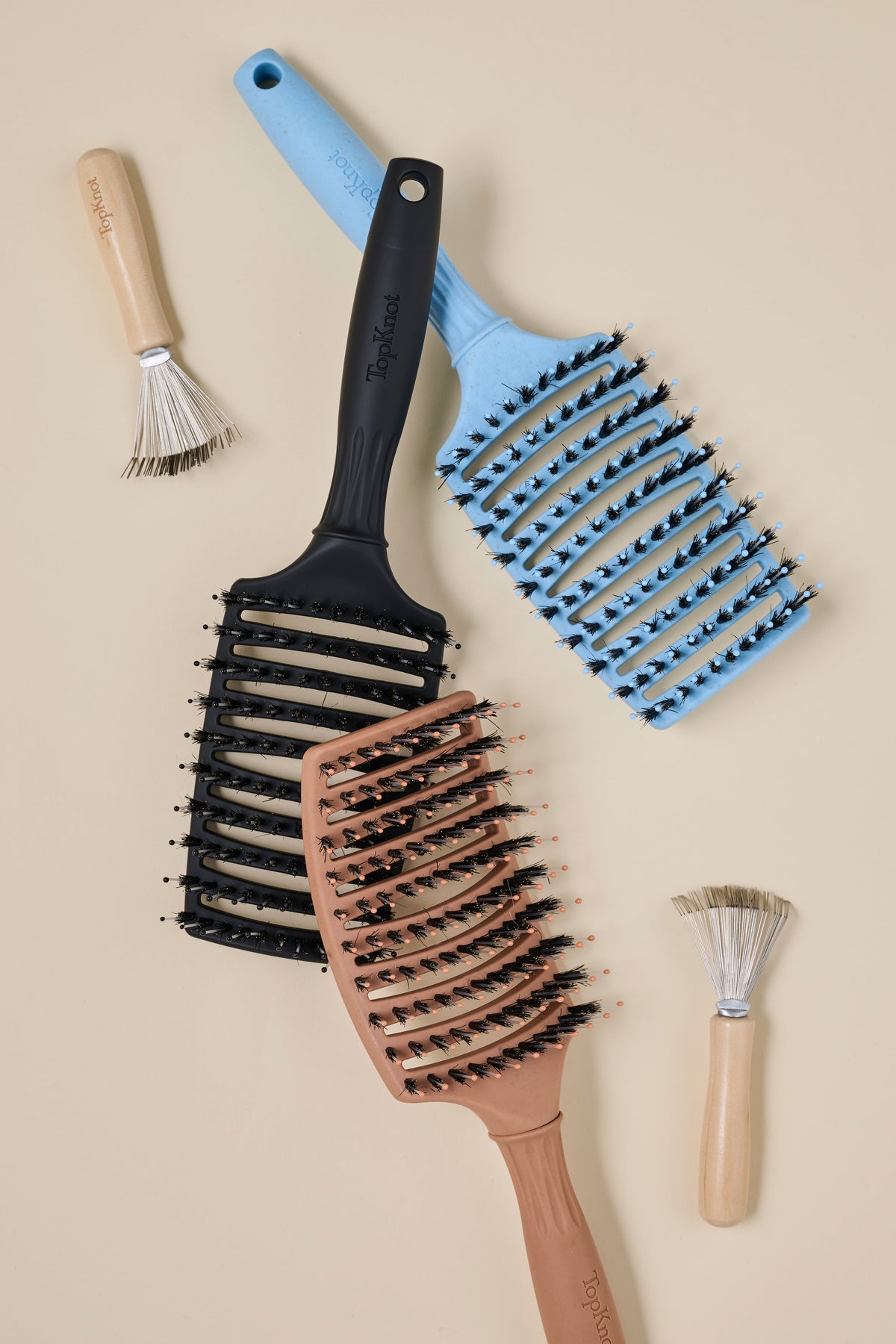
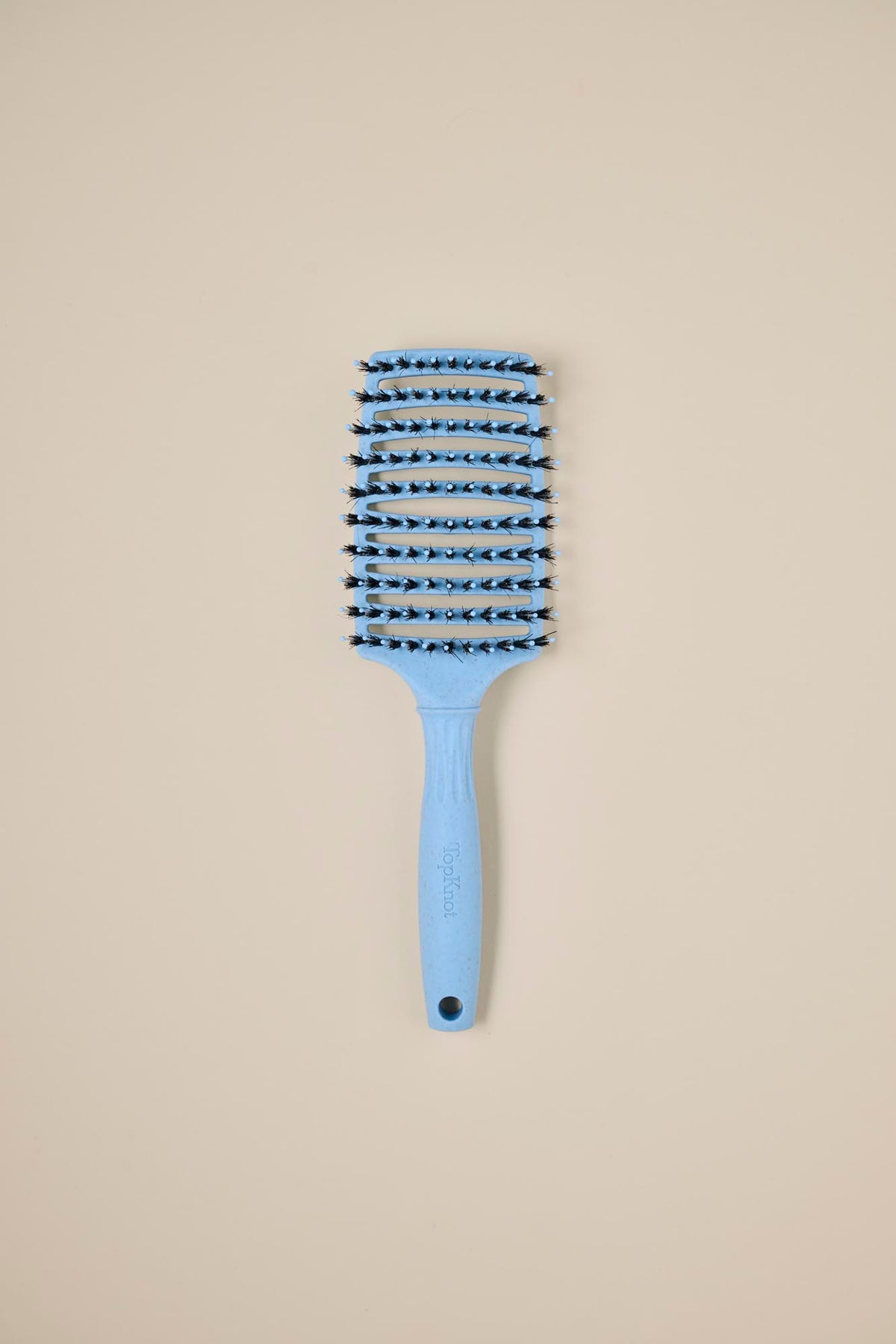
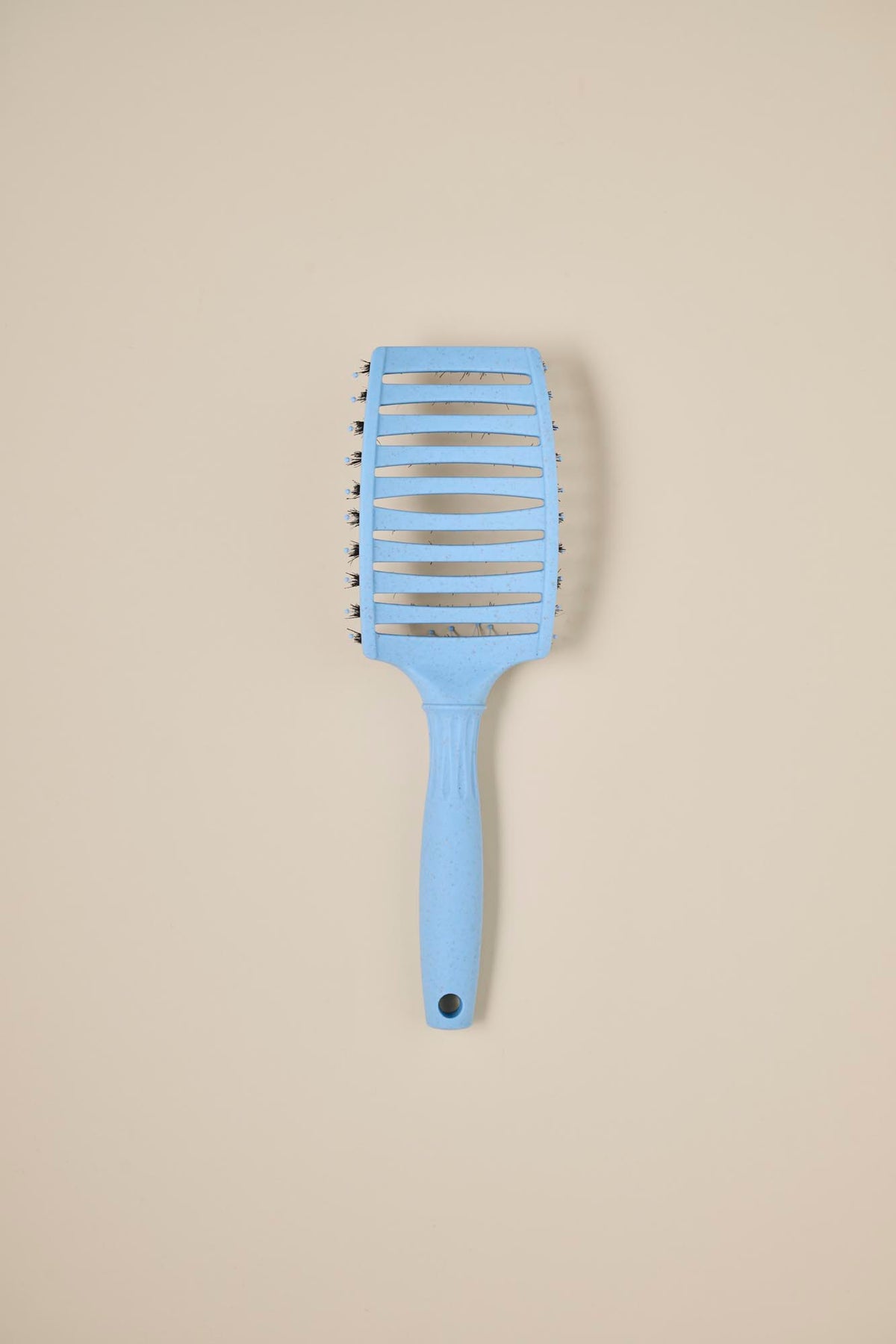
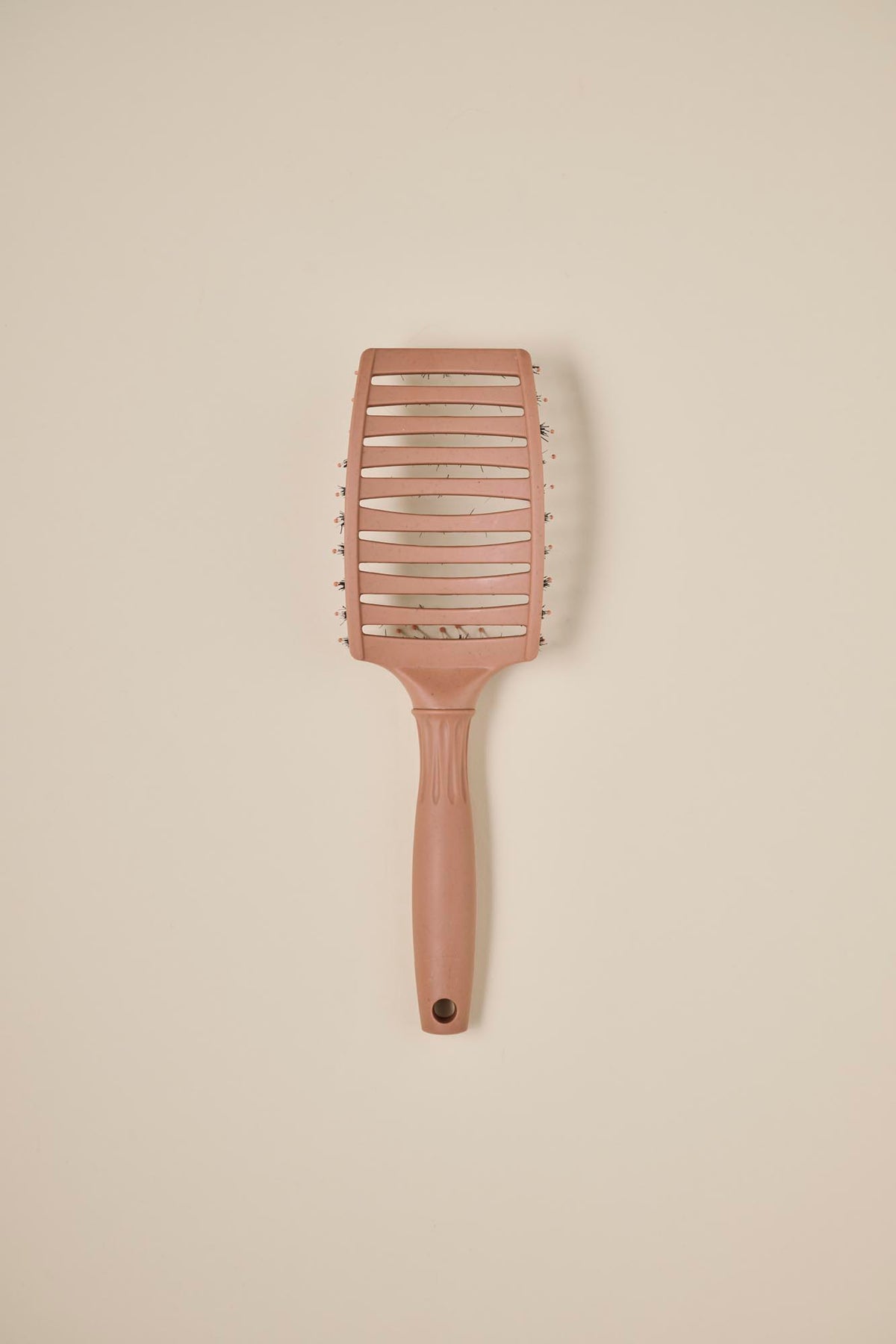
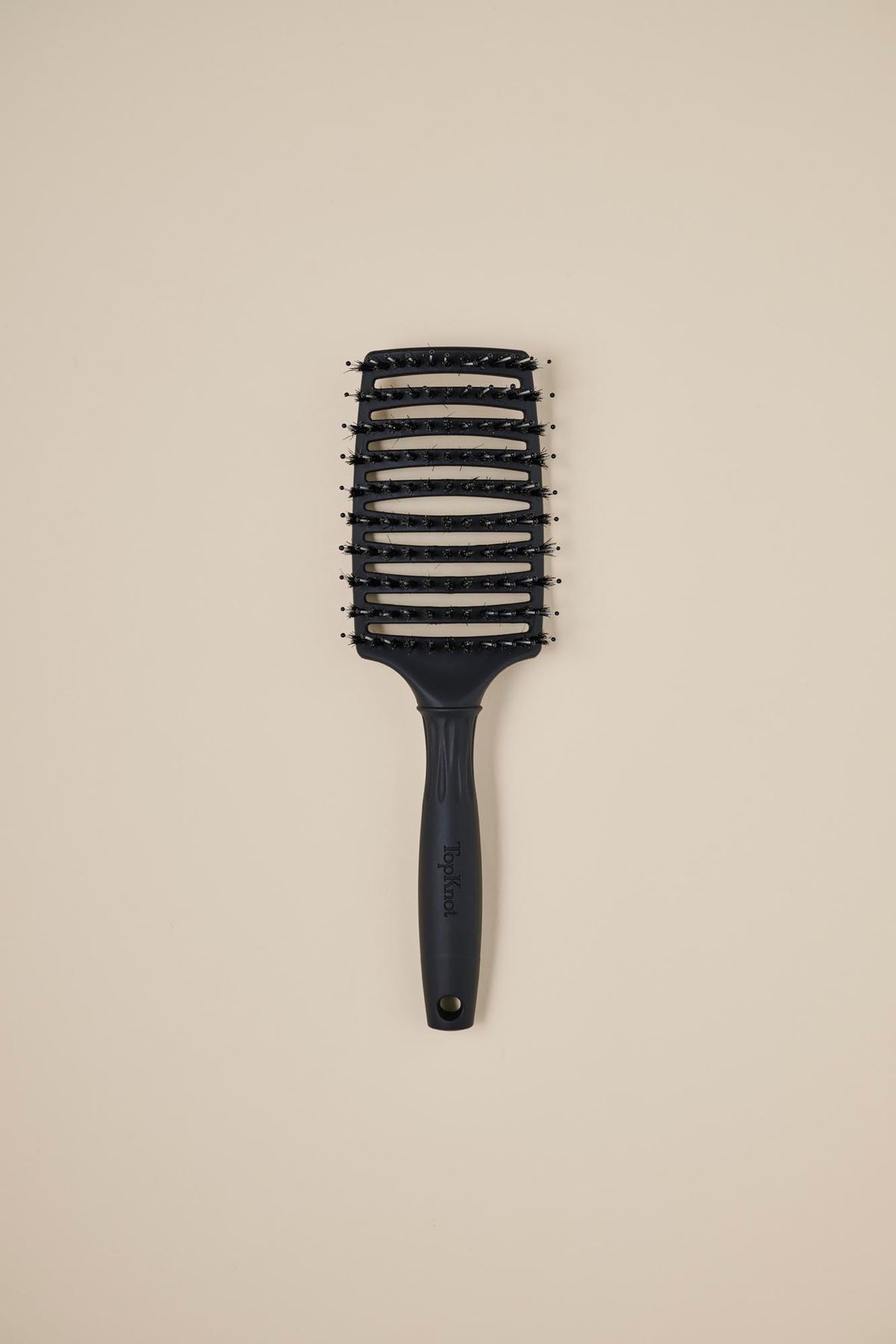
The Curvy Detangler is a curved, vented detangling brush that pairs real boar bristle with flexible nylon prongs.
- The handle is made with 30% wheat straw, a by-product of grain farming, blended with plastic. Wheat straw handles usually contain around 10%, so we asked our manufacturing partner to go further. Every percentage point means less petro-plastic, and less fossil fuel, in each brush.
- The boar bristles are a natural material. They smooth the hair and help spread its natural oils as you brush.
- The nylon prongs are plastic. We use them because they flex through knots gently, and we haven't yet found a plant-based alternative that performs as well.
It isn't a plastic-free brush, and we won't call it one. It is a brush made with less plastic, designed to last for years, and a clear first step in the direction we want to go.
The Gloss Boss
The Gloss Boss is our finishing brush, made for smoothing and shine.
- The handle is Camellia wood, chosen for its warmth, weight and durability.
- The cushion is natural rubber, which flexes gently against the scalp.
- The bristles are boar bristle, which smooth the cuticle and carry natural oils from roots to ends.
- The prongs are ball-tipped nylon, which help the brush move through the hair.
Again, the nylon is the one part we're still working to replace. Everything else was chosen to feel beautiful in the hand, and to last.
The standards we're working toward
Words like "eco" and "ethical" are easy to use and hard to prove. So we're working toward independent standards that show our claims are real. These are the ones we're pursuing with our suppliers:
- FSC® (Forest Stewardship Council) for our wooden handles, cleaning combs and paper packaging, confirming the wood comes from responsibly managed forests.
- OEKO-TEX® STANDARD 100 for the natural rubber cushion and cotton travel bag, confirming they're tested for harmful substances.
- GRS (Global Recycled Standard) for any recycled cotton and packaging, verifying recycled content and responsible production.
- ISO 9001, 14001 and 45001 at factory level, covering quality, environmental management and workplace safety.
- Sedex SMETA, BSCI or WRAP audits, which check for fair labour, safe working conditions, and no forced or child labour.
As each certification is confirmed, we'll share it here and on our packaging. Until then, we'd rather tell you what we're working on than claim something we can't yet show.
Beautiful, and considered
In the early days of the eco movement, many sustainable products felt like a compromise. They did good, but they weren't always beautiful, and they didn't always work as well as they should.
We believe you shouldn't have to choose. Good design, real performance and responsible materials can live in the same object, and the most exciting brands today are proving it.
That balance is the sweet spot we're always reaching for. A brush you love to look at, that works beautifully, and that you feel good about owning for years.
It's also only the beginning. Plastic has found its way into so many everyday things, from towels to imitation silk. Next, we plan to bring the same thinking to a collection of self-care essentials made from natural materials like organic cotton and mulberry silk. The aim is to return to simple, beautiful materials and to use them responsibly.
One good brush, made to last
We aren't asking anyone to buy more. We'd love you to choose one brush, made well and looked after, and keep it for years. That, more than any single material, is the most considered choice any of us can make.
We'll keep sharing what we learn along the way: the progress, the questions and the trade-offs too.
Effortless self-care. Consciously made.




Leave a comment
This site is protected by hCaptcha and the hCaptcha Privacy Policy and Terms of Service apply.